
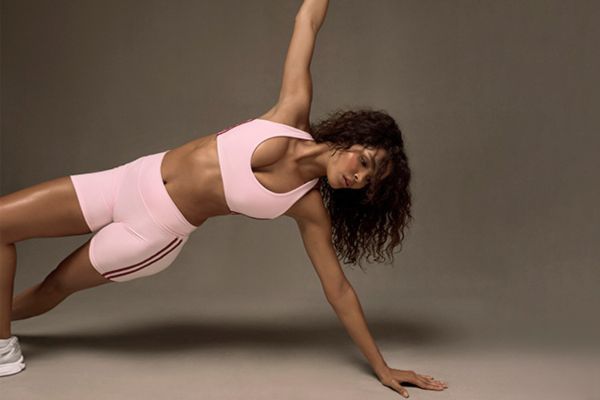


There is a version of getting dressed for the gym that takes thirty seconds and leaves you feeling like an afterthought. Mismatched sports bra, gym leggings from three different sets, a headband from a different era. You are technically dressed. You do not feel ready.
The short answer: The easiest way to match gym clothes with accessories is to start with a cohesive base outfit, then add one or two neutral accessories such as a black gym bag, clean trainers, or a matching headband. The goal is balance rather than perfect colour matching - one element leads, the rest support.
Research on enclothed cognition published in the Journal of Experimental Social Psychology found that clothing associated with focus and competence can influence attention and task performance. A training outfit that feels considered is not vanity. It is part of the preparation.
Key Takeaways
- Start with a cohesive base: a matching set or a tonal two-piece before adding accessories
- Keep accessories neutral or accent - never both at the same time
- One item leads the outfit; everything else supports it
- Black accessories read as neutral and work with any training colourway
- Accessories should work with the session, not against it - function leads form.
Whether you lift weights, attend Pilates classes, run outdoors, or train at the gym after work, these styling principles work across most types of activewear and training styles.
Start with the Training Outfit Itself
You cannot accessorise around a training outfit that does not have a clear foundation. The accessories only work when the clothes underneath them are already cohesive.
The foundation is simpler than most people make it: pick a colourway and build from it.
Black as your base. A pair of black gym leggings with a black sports bra is the easiest starting point in activewear, and the most durable one. Black gym shorts or a black workout top do not need to match anything - they already coordinate with everything. Black is not the safe choice because it is boring. It is the smart choice because it visually anchors the silhouette without competing with anything you add around it.
A black workout jacket, black flare leggings, a black seamless sports bra - any single black piece becomes a foundation others can build around. When choosing accessories, black as a base means any colour you add works: a camel headband, a white bag, bright trainers. Nothing clashes because black absorbs rather than competes.
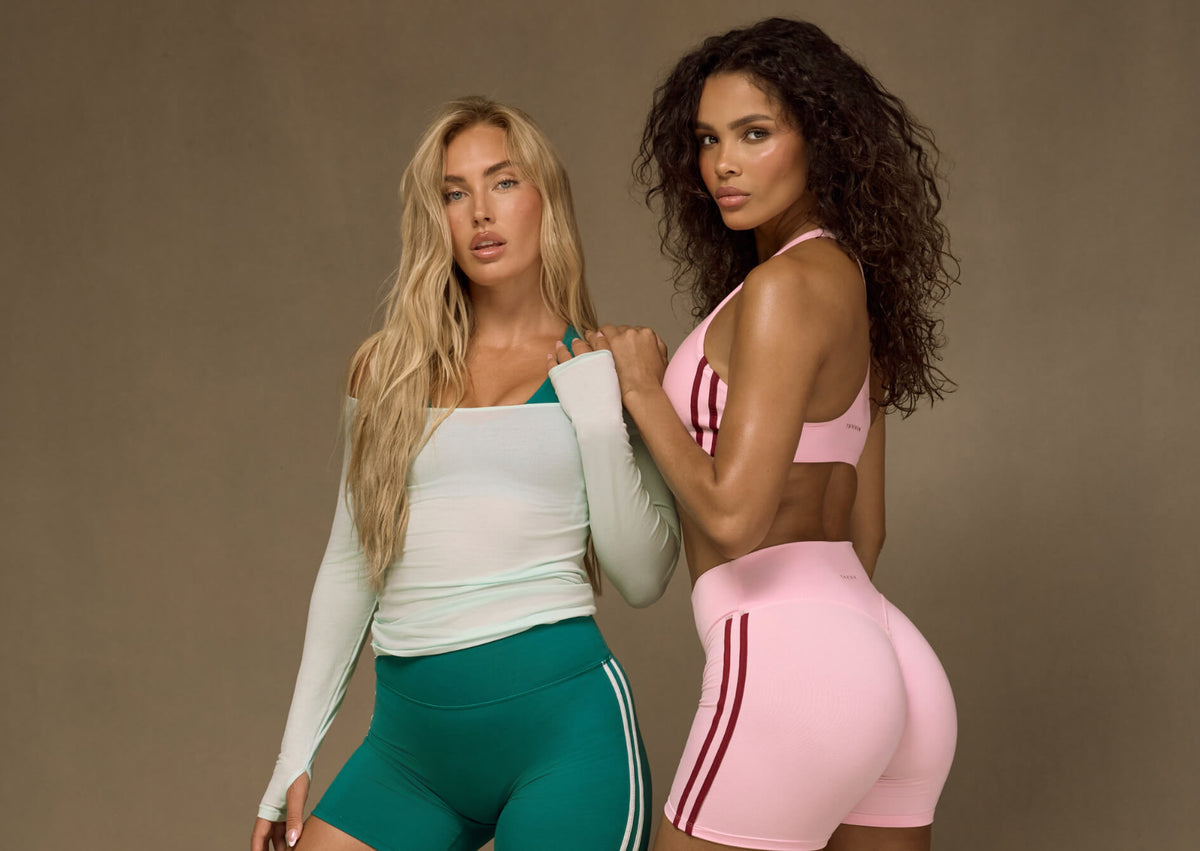
Colour sets as an alternative foundation. If you train in a matching set - high waist scrunch leggings with a matching seamless sports bra, or scrunch shorts with a coordinating sports bra - the colourway is already decided. This approach, sometimes called tonal dressing or monochrome styling within the athleisure space, is one of the most effective ways to look put-together with minimal effort. Your accessories become the supporting layer rather than the problem-solving layer. An Endless Sky set does not need a coordinated bag in the same shade. It needs a neutral one that does not fight it.
The two-tone approach. If you are not working in a full matching set, keep bottoms and tops within the same tonal family rather than identical shades. Black high waist leggings with a charcoal or dark navy top read as intentional. The same leggings with a bright red top read as an outfit that happened rather than one that was put together.
Image suggestion. Matching black gym set with white trainers and a camel structured duffel - monochrome base with warm neutral accessories.
Gym Accessories That Actually Elevate a Look
Most accessory guides for the gym treat accessories as an afterthought. These are the ones that genuinely change how a training outfit reads.
The Headband
The headband is simultaneously the most functional and most visible accessory in a gym look. It sits at the top of your face, which means it is the first thing anyone notices.
A workout headband should do two things: keep hair and sweat off your face during a session, and sit cleanly without looking like it is doing too much work. Wider bands sit more securely during high-intensity sessions and tend to read more intentionally than a thin elastic band. Scrunchies work well for securing hair during lighter sessions and Pilates, where the aesthetic is generally quieter.
In terms of matching: a headband in a neutral tone - cream, camel, or black - works across every colourway you own. A headband in a matching colourway to your set is the tightest, most coordinated version of a training look. Pick one approach and be consistent.

The Bag
A gym bag that is overstuffed, worn in, or clearly mismatched to the rest of the outfit undermines everything else you are wearing. A bag that fits the scale of what you are carrying, holds its shape, and sits in the right tonal range for the outfit pulls everything together.
The matching principle for bags is simpler than for clothes: go neutral. A black duffel bag works with every training outfit. A tan or camel tote works with warm tones and neutrals. A white or cream bag works with lighter palettes. What to avoid is a bright neon gym bag with a muted, considered training set, or a heavily branded bag that competes with the rest of the outfit for attention. A crossbody or compact bag works particularly well for studio sessions, where a large duffel feels out of proportion.
Water Bottle and Shaker
A stainless steel bottle or shaker carried in hand or in the exterior holder of your bag is visible the entire commute to and from training. Its colour and condition are part of how the overall look reads.
A bottle in a muted tone - black, cream, sage, taupe - works with almost any training outfit. A clear bottle is always a clean choice. Bright novelty bottles compete with the outfit rather than completing it.
Trainers
Footwear is where most gym-goers either pull a look together or accidentally pull it apart.
The principle: match the visual weight of the trainer to the visual weight of the outfit. A streamlined, clean-soled trainer works with a fitted training set - high waisted workout leggings and a seamless bra. A chunkier sole adds visual weight that works well with flare leggings or flared yoga pants, where the wider leg needs something to ground it visually because the extra fabric creates an imbalance without something substantial at the base.
Black trainers work with every gym outfit because they visually anchor the lower half of the body without competing with brighter leggings or sports bras above them. White trainers work with most. A trainer that deliberately picks up one colour from the training set is the most intentional approach - one of the cleanest ways to tie a look together without a full matching set.
Socks
An underrated detail. Ankle socks or frill ruffle socks that match the trainer rather than the legging create a cleaner line from shoe to leg. Mismatched socks - a white crew sock with black trainers and dark leggings - interrupt the silhouette by drawing the eye downward to an unintended break. A simple rule: if the trainer is dark, match the sock to it. If the trainer is white or light, a clean white or neutral sock keeps the line unbroken.

Lifting Accessories
Wrist wraps, a lifting belt, or weightlifting gloves are functional accessories that can still be chosen with some visual awareness. Black or neutral tones for these items integrate cleanly with any training outfit. Brightly coloured lifting accessories on an otherwise cohesive dark outfit create a visual interruption. If you use them, treat them as part of the outfit decision, not an afterthought pulled from the bottom of your bag.
How to Build a Coordinated Look by Outfit Type
The Matching Set
The matching set - sometimes called a two-piece or co-ord in athleisure styling - is the easiest approach and the most impactful when done well. High waist scrunch leggings with a matching seamless sports bra in one colourway creates an immediate visual cohesion that separates cannot replicate without considerably more thought.
Accessories for a matching set: keep them simple. A neutral headband, a neutral bag, clean trainers in black or white. The set is doing the work - the accessories support, they do not add. A gym jacket in cream, white, or black completes the look for the commute without competing with the colourway underneath.
The Elevate™ range is designed with this in mind. Every colourway runs across scrunch leggings, sports bras, scrunch shorts, and seamless tops so building a complete matching look is one decision rather than several.

The Monochrome Black Look
An all-black training outfit has more visual range than most people realise, and it is where accessories do the most interesting work. Colour blocking with one neutral colourway is one of the most effective approaches in activewear styling.
Black high waist leggings with a black sports bra and a black workout jacket creates a clean, high-contrast base. From there, a camel or tan headband adds warmth without colour noise. White trainers add sharpness. A structured black gym bag keeps the silhouette clean. One warm or metallic-toned accessory - an earring if worn, a tan scrunchie on the wrist - is what completes an all-black look rather than leaving it reading as a uniform.

The Studio and Pilates Look
For Pilates, barre, and yoga, the outfit sits in a quieter register. Yoga pants or flare workout leggings in a muted colourway, with a seamless bra or halterneck top. Grip socks are a functional accessory that reads as deliberate in a studio environment — a textured or subtly patterned grip sock in a complementary tone is a detail that regular studio-goers notice.
Hair: a clean, flat headband rather than a pile of gym hair with a stretched elastic. Carry a tote or small bag rather than a large duffel for studio sessions - the proportions fit the setting better and the walk in and out looks more intentional.
Image suggestion: Studio Pilates outfit with flare leggings, seamless halterneck, grip socks, and small structured tote - quiet, coordinated, studio-appropriate.
The Gym-to-Street Look
The gym-to-street or athleisure look has to perform during training and read as intentional on the other side of the changing room. The base is the training set - butt lifting leggings or high waisted workout leggings with a sports bra or compression top.
The layer changes everything.
A women's activewear jacket or seamless jacket over the set reads as a complete outfit rather than gym kit in progress. The Elevate™ Seamless Jacket in Cream over any Summer On Her colourway does this cleanly - it sits over the set without competing with the colour underneath and is light enough to carry rather than wear if the temperature changes.
Footwear for this transition: go clean rather than performance. A technically aggressive trail trainer reads as purely functional. A cleaner trainer in the same colour family reads as a choice.
The Colour Matching Rules That Actually Work
Rule 1: One colourway, multiple pieces. A matching set in one colour will always look more cohesive than a mixed set in multiple colours, however carefully chosen. If you want to mix, keep one piece as the anchor colour and use everything else as a neutral around it.
Rule 2: Accessories go neutral or accent - never both. If your bag is a statement colour, your headband and trainers should be neutral. If your trainers are a statement colour, everything else should be quiet. Two competing accessories in different colourways create visual noise rather than intention.
Rule 3: Skin-adjacent tones elongate. Nude and skin-adjacent tones in seamless sports bras or seamless tops under a coloured jacket create a sense of proportion that works particularly well with high-waisted bottoms. The top disappears visually; the high waist becomes the focal point.
Rule 4: Black accessories read as neutral. A black headband, black bag, and black trainers do not count as three separate colour decisions. They read as a neutral platform from which anything else can be built.
Rule 5: The loudest item earns the rest. If your scrunch bum leggings are in Melon, everything above the waist should be quieter. If your seamless sports bra is a bold colourway, your leggings can pick up the tone or step back to black. One piece leads. The rest follow.
Accessory Matching at a Glance
|
Outfit |
Best Accessories |
Avoid |
|
Black gym leggings + black sports bra |
White trainers, camel headband, structured duffel |
Bright neon bag, mismatched coloured socks |
|
Matching coloured set |
Neutral headband, black or white trainers, cream jacket |
Second accent colour at the bag or sock level |
|
Flare leggings + seamless bra |
Chunkier sole trainer, small tote, flat headband |
Thin minimal sole that gets visually lost under the flare |
|
Pilates / studio look |
Grip socks, small tote, clean flat headband |
Large duffel, heavy trainer sole |
|
Gym-to-street |
Seamless jacket over the set, clean trainer, structured neutral bag |
Technical trail trainer, oversized gym bag |
|
Summer outdoor training |
Lightweight headband, sunglasses in neutral frame, compact crossbody |
Overstuffed duffel, heavily branded accessories |
What to Avoid
Matchy-matchy at the accessory level. A colour-matched bag, headband, water bottle, and scrunchie in the same shade reads as a costume rather than an outfit. One matching element is a considered detail. Four is overdone.
Accessories that fight the session. A bag that cannot be opened with one hand, earrings that have to come out for every class, or trainers wrong for the surface you are training on are choices that make the session harder. Function should always lead form in activewear - the accessories that look best also work best.
Ignoring proportion. A very large duffel bag with a minimal outfit overwhelms. A tiny crossbody with a large training jacket and oversized trainers disappears. The proportions of your accessories should relate to the proportions of the outfit.
Saving the good kit for non-gym days. The best argument for a considered gym look is that it makes you feel more ready to train. The session is not a rehearsal for a time when you will put together a proper outfit. The gym look is the proper outfit.
Frequently Asked Questions
How do I match gym clothes with accessories?
Start with a cohesive base outfit - either a matching set or a tonal two-piece - then add one or two accessories in neutral tones. The simplest approach: black trainers, a neutral headband, and a bag that does not compete with the outfit's colourway. Keep one element as the lead and everything else as support.
Should gym accessories match each other?
They do not need to match each other exactly, but they should sit in the same tonal family. A camel headband and a tan bag work together without being identical. What to avoid is multiple accessories in different statement colours that compete for attention.
What colour gym bag goes with everything?
Black goes with everything and visually grounds any outfit. Tan or camel works with warm colourways and neutrals. White or cream works particularly well with lighter or pastel training sets. Bright coloured bags work when everything else in the outfit is neutral.
Can you wear jewellery to the gym?
Small studs, a short flat chain, and a minimal ring all work for most training styles. Hoops, pendants, and anything that catches on equipment or clothing should stay off the gym floor. Many lifters remove rings for heavy barbell sessions to avoid skin abrasion. A fitness tracker or clean-faced smartwatch is always a good addition - it reads as purposeful and pulls the outfit together.
How many colours should a gym outfit have?
Two to three as a maximum. One colourway for the base outfit, one neutral for the accessories, and optionally one accent. More than three usually reads as busy rather than bold. A monochrome outfit with one warm or metallic accent is often the most considered approach.
Do matching gym sets actually look better?
Yes, for most people and most settings. A matching activewear set removes the colour-coordination problem entirely and creates a visual cohesion that separates require considerably more effort to achieve. The matching set is the shortest route from dressed to put-together.
What accessories do I need for the gym?
The essentials: a workout headband that holds during training, a bag sized to what you actually carry, clean trainers appropriate for the session, and a water bottle or shaker in a neutral tone. Everything beyond that - lifting accessories, socks, fitness tracker - follows the same rule: choose it once, choose it with awareness, and it becomes part of the outfit rather than an afterthought.
Matching gym clothes with accessories is not about following fashion rules. It is about creating an outfit that feels functional, balanced, and easy to wear from the moment you put it on. Start with quality activewear, add accessories that support your training, and build a wardrobe where every piece works with the others. When your gym kit feels intentional, getting dressed becomes one less decision before you train and one more thing working in your favour before you walk through the door.


